Director
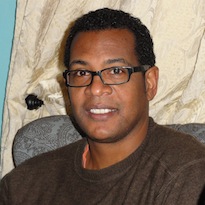
Gary Wilder (gwilder@gc.cuny.edu)
Associate Professor of Anthropology at the CUNY Graduate Center
Before coming to CUNY in 2009, Professor Wilder was a member of the Pomona College History Department. He has a joint Ph.D. in history and in anthropology and is the author of The French Imperial Nation-State: Negritude and Colonial Humanism between the TwoWorld Wars (University of Chicago, 1995). He is currently writing a book titled “Freedom Time: Negritude, Decolonization, Utopia” which he plans to follow with a collection of essays provisionally titled “Unthinking History.” In 2007-2008 a Mellon Foundation “New Directions” Fellowship allowed him to spend a year as a Visiting Fellow of the Human Rights Program at Harvard Law School. His research on the French empire, French West Africa, and the Francophone Caribbean is located at the intersection of historical anthropology, intellectual history, and critical social theory.

Associate Professor of Anthropology at the CUNY Graduate Center
Before coming to CUNY in 2009, Professor Wilder was a member of the Pomona College History Department. He has a joint Ph.D. in history and in anthropology and is the author of The French Imperial Nation-State: Negritude and Colonial Humanism between the TwoWorld Wars (University of Chicago, 1995). He is currently writing a book titled “Freedom Time: Negritude, Decolonization, Utopia” which he plans to follow with a collection of essays provisionally titled “Unthinking History.” In 2007-2008 a Mellon Foundation “New Directions” Fellowship allowed him to spend a year as a Visiting Fellow of the Human Rights Program at Harvard Law School. His research on the French empire, French West Africa, and the Francophone Caribbean is located at the intersection of historical anthropology, intellectual history, and critical social theory.
Core Faculty
Susan Buck-Morss (sbm5@cornell.edu)
Distinguished Professor of Political Science at the CUNY Graduate Center
Susan Buck-Morss is Professor of Political Science at CUNY Graduate Center beginning in fall 2010. She has held the Jan Rock Zubrow ’77 Professor of Government at Cornell University as a member of the graduate fields of Comparative Literature, German Studies, History of Art and Visual Studies, and the School of Art, Architecture and Planning. Her books include Hegel, Haiti, and Universal History (Pittsburgh University Press, 2009), Thinking Past Terror: Islamism and Critical Theory on the Left (Verso, 2003), Dreamworld and Catastrophe: The Passing of Mass Utopia in East and West (The MIT Press, 2000); The Dialectics of Seeing: Walter Benjamin and the Arcades Project (MIT Press, 1989); and The Origin of Negative Dialectics: Theodor W. Adorno, Walter Benjamin, and the Critical Theory of the Frankfurt School(Free Press, 1977; 2nd ed., 2002). Photo by: Don Pollard

Distinguished Professor of Political Science at the CUNY Graduate Center
Susan Buck-Morss is Professor of Political Science at CUNY Graduate Center beginning in fall 2010. She has held the Jan Rock Zubrow ’77 Professor of Government at Cornell University as a member of the graduate fields of Comparative Literature, German Studies, History of Art and Visual Studies, and the School of Art, Architecture and Planning. Her books include Hegel, Haiti, and Universal History (Pittsburgh University Press, 2009), Thinking Past Terror: Islamism and Critical Theory on the Left (Verso, 2003), Dreamworld and Catastrophe: The Passing of Mass Utopia in East and West (The MIT Press, 2000); The Dialectics of Seeing: Walter Benjamin and the Arcades Project (MIT Press, 1989); and The Origin of Negative Dialectics: Theodor W. Adorno, Walter Benjamin, and the Critical Theory of the Frankfurt School(Free Press, 1977; 2nd ed., 2002). Photo by: Don Pollard
Kandice Chuh (kchuh@gc.cuny.edu)
Professor of English at the CUNY Graduate Center
Kandice Chuh joined the CUNY Graduate Center in 2010 as a professor in the PhD program in English, and as a core member of the Mellon Committee on Globalization and Social Change. With Duncan Faherty (Assoc. Prof, Queens/GC, English), Chuh is also responsible for the Revolutionizing American Studies Initiative launched at the Graduate Center in spring 2011. From 1996-2010, she was a faculty member in the English Department at the University of Maryland, College Park, where she was affiliated to the American Studies Department and the Asian American Studies Program. The author of Imagine Otherwise: on Asian Americanist Critique (2003), which won the American Studies Association’s Lora Romero Book Award, Chuh is the co-editor, with Karen Shimakawa, of Orientations: Mapping Studies in the Asian Diaspora (2001), and has published in such venues as Public Culture, American Literary History, and the Journal of Asian American Studies. Her current book project, The Difference Aesthetics Makes, brings together aesthetic philosophies and theories, minority discourse, and analysis of globalization’s impact on modern sociopolitical subjectivity. Chuh is broadly interested in the relationship between intellectual work and the political sphere; disciplinarity and difference; and U.S. culture and politics as matrices of power and knowledge.

Professor of English at the CUNY Graduate Center
Kandice Chuh joined the CUNY Graduate Center in 2010 as a professor in the PhD program in English, and as a core member of the Mellon Committee on Globalization and Social Change. With Duncan Faherty (Assoc. Prof, Queens/GC, English), Chuh is also responsible for the Revolutionizing American Studies Initiative launched at the Graduate Center in spring 2011. From 1996-2010, she was a faculty member in the English Department at the University of Maryland, College Park, where she was affiliated to the American Studies Department and the Asian American Studies Program. The author of Imagine Otherwise: on Asian Americanist Critique (2003), which won the American Studies Association’s Lora Romero Book Award, Chuh is the co-editor, with Karen Shimakawa, of Orientations: Mapping Studies in the Asian Diaspora (2001), and has published in such venues as Public Culture, American Literary History, and the Journal of Asian American Studies. Her current book project, The Difference Aesthetics Makes, brings together aesthetic philosophies and theories, minority discourse, and analysis of globalization’s impact on modern sociopolitical subjectivity. Chuh is broadly interested in the relationship between intellectual work and the political sphere; disciplinarity and difference; and U.S. culture and politics as matrices of power and knowledge.
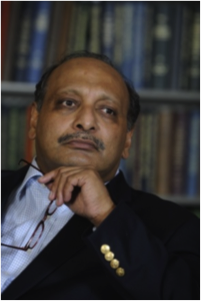
Uday Singh Mehta (usmehta@amherst.edu)
Distinguished Professor of Political Science at the CUNY Graduate Center
Uday Singh Mehta, Distinguished Professor of Political Science at the Graduate Center, is a political theorist whose work encompasses a wide spectrum of philosophical traditions. He has written on the relationship between freedom and imagination, liberalism’s complex link with colonialism and empire, and more recently on war, peace and non-violence. He is the author of two books, The Anxiety of Freedom: Imagination and Individuality in the Political Thought of John Locke (Cornell University Press, 1992), and Liberalism and Empire: Nineteenth Century British Liberal Thought(University of Chicago Press, 1999). He is currently completing a book on war, peace and nonviolence, which focuses on the moral and political thought of M.K. Gandhi. He received his undergraduate education at Swarthmore College, where he studied mathematics and philosophy. He received his Ph.D. in political philosophy from Princeton University. Photo by: Don Pollard

Distinguished Professor of Political Science at the CUNY Graduate Center
Uday Singh Mehta, Distinguished Professor of Political Science at the Graduate Center, is a political theorist whose work encompasses a wide spectrum of philosophical traditions. He has written on the relationship between freedom and imagination, liberalism’s complex link with colonialism and empire, and more recently on war, peace and non-violence. He is the author of two books, The Anxiety of Freedom: Imagination and Individuality in the Political Thought of John Locke (Cornell University Press, 1992), and Liberalism and Empire: Nineteenth Century British Liberal Thought(University of Chicago Press, 1999). He is currently completing a book on war, peace and nonviolence, which focuses on the moral and political thought of M.K. Gandhi. He received his undergraduate education at Swarthmore College, where he studied mathematics and philosophy. He received his Ph.D. in political philosophy from Princeton University. Photo by: Don Pollard
Advisory Board
Herman Bennett (bennett.herman@gmail.com) 
Professor of History at the CUNY Graduate Center
Herman Bennett is a renowned scholar on the history of the African diaspora, with a particular focus on Latin American history. Through his work, he has called for scholars to broaden the critical inquiry of race and ethnicity in the colonial world. He has written extensively on the presence of African slaves and freedmen in Mexican society during the colonial period and on the consequent interaction between Native Americans, Europeans, and Africans in colonial Mexico. His books include Colonial Blackness: A History of Afro-Mexico (Indiana University Press, 2009) and Africans in Colonial Mexico: Absolutism, Christianity and Afro-Creole Consciousness, 1570–1640 (Indiana University Press, 2003), in which he offers a social historical examination of free Afro-Mexican kinship practices in the mature and late-colonial periods. Bennett has received fellowships from the Institute for Advanced Study at Princeton, the Mellon Foundation, the National Endowment for the Humanities, and the American Council of Learned Societies. He has lectured widely in Europe and the Americas, and comes to the Graduate Center from Rutgers University after starting his scholarly career at Johns Hopkins University. Bennett holds a Ph.D. in Latin American history from Duke University where he was a Mellon Scholar of the Humanities.
Professor of History at the CUNY Graduate Center
Herman Bennett is a renowned scholar on the history of the African diaspora, with a particular focus on Latin American history. Through his work, he has called for scholars to broaden the critical inquiry of race and ethnicity in the colonial world. He has written extensively on the presence of African slaves and freedmen in Mexican society during the colonial period and on the consequent interaction between Native Americans, Europeans, and Africans in colonial Mexico. His books include Colonial Blackness: A History of Afro-Mexico (Indiana University Press, 2009) and Africans in Colonial Mexico: Absolutism, Christianity and Afro-Creole Consciousness, 1570–1640 (Indiana University Press, 2003), in which he offers a social historical examination of free Afro-Mexican kinship practices in the mature and late-colonial periods. Bennett has received fellowships from the Institute for Advanced Study at Princeton, the Mellon Foundation, the National Endowment for the Humanities, and the American Council of Learned Societies. He has lectured widely in Europe and the Americas, and comes to the Graduate Center from Rutgers University after starting his scholarly career at Johns Hopkins University. Bennett holds a Ph.D. in Latin American history from Duke University where he was a Mellon Scholar of the Humanities.
Juliette Blevins (jblevins@gc.cuny.edu)
Professor of Linguistics at the CUNY Graduate Center
Juliette Blevins is a world-class phonologist and an advocate for endangered and minority languages, with expertise in Austronesian, Australian Aboriginal, Native American, and Andamanese languages. Her first book, Nhanda, an Aboriginal Language of Western Australia, was based on work with the last speakers of the language, which has now become extinct. Her book Evolutionary Phonology (Cambridge University Press, 2004) explores the nature of sound patterns and sound change in human language and presents a new theory synthesizing results in historical linguistics, phonetics, and phonological theory. As a senior research scientist at the Max Planck Institute for Evolutionary Anthropology in Leipzig, Blevins has worked on a range of major projects, from continued description of the Yurok language of northwestern California, to the role of analogy in grammar, to the reconstruction of proto-languages of two distinct language groups of the Andaman Islands. A major discovery by Blevins is an ancient link between Proto-Ongan of the south Andaman Islands and Proto-Austronesian, spoken six thousand years ago in Taiwan. Professor Blevins holds a Ph.D. in linguistics from the Massachusetts Institute of Technology, and has taught at the University of Texas, Austin; the University of Western Australia; Stanford University; the University of California, Berkeley; and the University of Leipzig.

Professor of Linguistics at the CUNY Graduate Center
Juliette Blevins is a world-class phonologist and an advocate for endangered and minority languages, with expertise in Austronesian, Australian Aboriginal, Native American, and Andamanese languages. Her first book, Nhanda, an Aboriginal Language of Western Australia, was based on work with the last speakers of the language, which has now become extinct. Her book Evolutionary Phonology (Cambridge University Press, 2004) explores the nature of sound patterns and sound change in human language and presents a new theory synthesizing results in historical linguistics, phonetics, and phonological theory. As a senior research scientist at the Max Planck Institute for Evolutionary Anthropology in Leipzig, Blevins has worked on a range of major projects, from continued description of the Yurok language of northwestern California, to the role of analogy in grammar, to the reconstruction of proto-languages of two distinct language groups of the Andaman Islands. A major discovery by Blevins is an ancient link between Proto-Ongan of the south Andaman Islands and Proto-Austronesian, spoken six thousand years ago in Taiwan. Professor Blevins holds a Ph.D. in linguistics from the Massachusetts Institute of Technology, and has taught at the University of Texas, Austin; the University of Western Australia; Stanford University; the University of California, Berkeley; and the University of Leipzig.
Claire Bishop (cbishop@gc.cuny.edu) 
Professor of Contemporary Art, Theory and Exhibition History at the CUNY Graduate Center
Professor Claire Bishop has previously taught in the Curating Contemporary Art department of the Royal College of Art, London, where she continues to be Visiting Professor, and at Warwick University(UK). She is a frequent contributor to Artforum and a research advisor for Former West. Professor Bishop is interested in post-medium specific art since the 1960s (performance art, installation, conceptual art, video, participation) and exhibition history. Recurrent themes in her research are spectatorship and the relationship between art and politics.
Professor of Contemporary Art, Theory and Exhibition History at the CUNY Graduate Center
Professor Claire Bishop has previously taught in the Curating Contemporary Art department of the Royal College of Art, London, where she continues to be Visiting Professor, and at Warwick University(UK). She is a frequent contributor to Artforum and a research advisor for Former West. Professor Bishop is interested in post-medium specific art since the 1960s (performance art, installation, conceptual art, video, participation) and exhibition history. Recurrent themes in her research are spectatorship and the relationship between art and politics.
Katherine Carl (kcarl@gc.cuny.edu) 
Professor of Art History and Deputy Director and Curator of the Center for the Humanities at the CUNY Graduate Center
Katherine Carl is Curator of the James Gallery and Deputy Director of the Center for the Humanities at the Graduate Center. Her other projects include School of Missing Studies, an experimental education platform for emerging and local architects and artists to research the phenomena of transition in cities including Belgrade, Munich, and New York. She was Curator of Contemporary Exhibitions at The Drawing Center in 2005-2007. This follows her work at Dia Art Foundation (1999-2003); manager of the international artists exchange program ArtsLink (1996-1997); and program specialist at the National Endowment for the Arts (1991-1995). She has taught art history, theory, and criticism and curatorial methods at Tyler School of Art (2010), Parsons (2009), Moore College of Art (2009) and New York University (2002-3). Carl received an American Council of Learned Societies fellowship in 2007 for completion of her dissertation (Aoristic Avant-Garde: Experimental Art in 1960s and ‘70s Yugoslavia) as well as numerous grants from The Trust for Mutual Understanding for her research and projects. Her co-edited books are Lost Highway Expedition Photobook (2007) and Evasions of Power (2011). Carl holds a PhD in Art History and Criticism from State University of New York, Stony Brook, and a B.A. from Oberlin College.

Professor of Art History and Deputy Director and Curator of the Center for the Humanities at the CUNY Graduate Center
Katherine Carl is Curator of the James Gallery and Deputy Director of the Center for the Humanities at the Graduate Center. Her other projects include School of Missing Studies, an experimental education platform for emerging and local architects and artists to research the phenomena of transition in cities including Belgrade, Munich, and New York. She was Curator of Contemporary Exhibitions at The Drawing Center in 2005-2007. This follows her work at Dia Art Foundation (1999-2003); manager of the international artists exchange program ArtsLink (1996-1997); and program specialist at the National Endowment for the Arts (1991-1995). She has taught art history, theory, and criticism and curatorial methods at Tyler School of Art (2010), Parsons (2009), Moore College of Art (2009) and New York University (2002-3). Carl received an American Council of Learned Societies fellowship in 2007 for completion of her dissertation (Aoristic Avant-Garde: Experimental Art in 1960s and ‘70s Yugoslavia) as well as numerous grants from The Trust for Mutual Understanding for her research and projects. Her co-edited books are Lost Highway Expedition Photobook (2007) and Evasions of Power (2011). Carl holds a PhD in Art History and Criticism from State University of New York, Stony Brook, and a B.A. from Oberlin College.
Clare Carroll (clare_carroll@qc.edu) 
Chair of the Comparative Literature Department and Director of Irish Studies at Queens College
Professor Clare Carroll is both Chair of the Comparative Literature Department and Director of Irish Studies at Queens College, City University of New York. Her most recent book is Ireland and Postcolonial Theory (Cork University Press and Notre Dame University Press, 2003). She is also the author of Circe’s Cup: Cultural Transformations in Early Modern Writing (Cork University Press, 2001) and The Orlando Furioso, A Stoic Comedy (Medieval and Renaissance Texts and Studies, 1997). With Vincent Carey, she edited Richard Beacon’s humanist dialogue on the colonization of Ireland, Solon His Follie (1996). She is also the editor of the Early Modern Period in the Longman Anthology of British Literature (3rd edition, 2006) and of the Longman Cultural Edition of Othello and Tragedy of Mariam (2003). She has published a number of articles on the early modern Irish diaspora in Spain is now turning her attention to Rome. Her current research on “The Irish in Seventeenth-Century Rome” combines her interests in Italian and Irish cultural history. She has been awarded an Irish American Cultural Institute Fellowship to work on this project in 2006-2007.

Chair of the Comparative Literature Department and Director of Irish Studies at Queens College
Professor Clare Carroll is both Chair of the Comparative Literature Department and Director of Irish Studies at Queens College, City University of New York. Her most recent book is Ireland and Postcolonial Theory (Cork University Press and Notre Dame University Press, 2003). She is also the author of Circe’s Cup: Cultural Transformations in Early Modern Writing (Cork University Press, 2001) and The Orlando Furioso, A Stoic Comedy (Medieval and Renaissance Texts and Studies, 1997). With Vincent Carey, she edited Richard Beacon’s humanist dialogue on the colonization of Ireland, Solon His Follie (1996). She is also the editor of the Early Modern Period in the Longman Anthology of British Literature (3rd edition, 2006) and of the Longman Cultural Edition of Othello and Tragedy of Mariam (2003). She has published a number of articles on the early modern Irish diaspora in Spain is now turning her attention to Rome. Her current research on “The Irish in Seventeenth-Century Rome” combines her interests in Italian and Irish cultural history. She has been awarded an Irish American Cultural Institute Fellowship to work on this project in 2006-2007.
Sujatha Fernandes (sujathaf@yahoo.com) 
Assistant Professor of Sociology at Queens College and the CUNY Graduate Center
Sujatha Fernandes is an Associate Professor of Sociology at Queens College and the Graduate Center of the City University of New York. She received her Ph.D. in Political Science from the University of Chicago in 2003. Her research interests include hip hop culture, neoliberalism, state-society relations, urban public space, and the role of culture in social movements, with an area focus on Latin America and the Caribbean. She has been the recipient of various fellowships, including a Wilson-Cotsen Postdoctoral Fellowship at PrincetonUniversity’s Society of Fellows in the Liberal Arts (2003-2006) and a Mellon Postdoctoral Fellowship at the Center for the Humanities,CUNY Graduate Center (2007-2008). In 2008, she was awarded the Feliks Gross Award from the CUNY Academy for Arts and Sciences in recognition of outstanding research. She is the author of Cuba Represent! Cuban Arts, State Power, and the Making of New Revolutionary Cultures (Duke University Press, 2006) and Who Can Stop the Drums? Urban Social Movements in Chávez’s Venezuela (Duke University Press, 2010). Her most recent book is Close to the Edge: In Search of the Global Hip Hop Generation (Verso, 2011). She is currently working on a new project exploring the unprecedented participation of everyday social movement actors in legislative advocacy in New York City.

Assistant Professor of Sociology at Queens College and the CUNY Graduate Center
Sujatha Fernandes is an Associate Professor of Sociology at Queens College and the Graduate Center of the City University of New York. She received her Ph.D. in Political Science from the University of Chicago in 2003. Her research interests include hip hop culture, neoliberalism, state-society relations, urban public space, and the role of culture in social movements, with an area focus on Latin America and the Caribbean. She has been the recipient of various fellowships, including a Wilson-Cotsen Postdoctoral Fellowship at PrincetonUniversity’s Society of Fellows in the Liberal Arts (2003-2006) and a Mellon Postdoctoral Fellowship at the Center for the Humanities,CUNY Graduate Center (2007-2008). In 2008, she was awarded the Feliks Gross Award from the CUNY Academy for Arts and Sciences in recognition of outstanding research. She is the author of Cuba Represent! Cuban Arts, State Power, and the Making of New Revolutionary Cultures (Duke University Press, 2006) and Who Can Stop the Drums? Urban Social Movements in Chávez’s Venezuela (Duke University Press, 2010). Her most recent book is Close to the Edge: In Search of the Global Hip Hop Generation (Verso, 2011). She is currently working on a new project exploring the unprecedented participation of everyday social movement actors in legislative advocacy in New York City.
Matthew K. Gold (mattgold@gmail.com) 
Assistant Professor, New York City College of Technology (English) and CUNY Graduate Center (Interactive Technology and Pedagogy)
Advisor to the Provost for Master’s Programs and Digital Initiatives, CUNY Graduate Center
Professor Gold’s teaching and research interests center on the digital humanities, digital writing and rhetoric, open-source pedagogy, and new-media studies. Recent work has appeared in The Journal of Modern Literature, On the Horizon (co-authored with George Otte), and Kairos, as well as the edited collections From A to <A>: Keywords of Markup andLearning Through Digital Media. He is editor of the collection Debates in the Digital Humanities, forthcoming from the University of Minnesota Press in 2012 as both a printed book and an open-access webtext. His projects include “Looking for Whitman” (http://lookingforwhitman.org), a multi-campus experiment in digital pedagogy sponsored by two NEH Digital Humanities Start-Up Grants, and a recently awarded Title V Grant from the U.S. Department of Education. He serves as Director of the CUNY Academic Commons.

Assistant Professor, New York City College of Technology (English) and CUNY Graduate Center (Interactive Technology and Pedagogy)
Advisor to the Provost for Master’s Programs and Digital Initiatives, CUNY Graduate Center
Professor Gold’s teaching and research interests center on the digital humanities, digital writing and rhetoric, open-source pedagogy, and new-media studies. Recent work has appeared in The Journal of Modern Literature, On the Horizon (co-authored with George Otte), and Kairos, as well as the edited collections From A to <A>: Keywords of Markup andLearning Through Digital Media. He is editor of the collection Debates in the Digital Humanities, forthcoming from the University of Minnesota Press in 2012 as both a printed book and an open-access webtext. His projects include “Looking for Whitman” (http://lookingforwhitman.org), a multi-campus experiment in digital pedagogy sponsored by two NEH Digital Humanities Start-Up Grants, and a recently awarded Title V Grant from the U.S. Department of Education. He serves as Director of the CUNY Academic Commons.
David Harvey (dharvey@gc.cuny.edu) 
Distinguished Professor of Anthropology at the CUNY Graduate Center
David Harvey, a leading theorist in the field of urban studies whom Library Journal called “one of the most influential geographers of the later twentieth century,” earned his Ph.D. from Cambridge University, was formerly professor of geography at Johns Hopkins, a Miliband Fellow at the London School of Economics, and Halford Mackinder Professor of Geography at Oxford. His reflections on the importance of space and place (and more recently “nature”) have attracted considerable attention across the humanities and social sciences. His highly influential books include The New Imperialism; Paris, Capital of Modernity; Social Justice and the City; Limits to Capital; The Urbanization of Capital; The Condition of Postmodernity; Justice, Nature, and the Geography of Difference; Spaces of Hope; and Spaces of Capital: Towards a Critical Geography. His numerous awards include the Outstanding Contributor Award of the Association of American Geographers and the 2002 Centenary Medal of the Royal Scottish Geographical Society for his “outstanding contribution to the field of geographical enquiry and to anthropology.” He holds honorary degrees from the universities of Buenos Aires, Roskilde in Denmark, Uppsala in Sweden, and Ohio State University.

Distinguished Professor of Anthropology at the CUNY Graduate Center
David Harvey, a leading theorist in the field of urban studies whom Library Journal called “one of the most influential geographers of the later twentieth century,” earned his Ph.D. from Cambridge University, was formerly professor of geography at Johns Hopkins, a Miliband Fellow at the London School of Economics, and Halford Mackinder Professor of Geography at Oxford. His reflections on the importance of space and place (and more recently “nature”) have attracted considerable attention across the humanities and social sciences. His highly influential books include The New Imperialism; Paris, Capital of Modernity; Social Justice and the City; Limits to Capital; The Urbanization of Capital; The Condition of Postmodernity; Justice, Nature, and the Geography of Difference; Spaces of Hope; and Spaces of Capital: Towards a Critical Geography. His numerous awards include the Outstanding Contributor Award of the Association of American Geographers and the 2002 Centenary Medal of the Royal Scottish Geographical Society for his “outstanding contribution to the field of geographical enquiry and to anthropology.” He holds honorary degrees from the universities of Buenos Aires, Roskilde in Denmark, Uppsala in Sweden, and Ohio State University.
Peter Hitchcock (Hitch58@comcast.net) 
Professor of English at the CUNY Graduate Center and Baruch College
Peter Hitchcock is Professor of English, Women’s Studies, and Film Studies at the City University of New York, Graduate School and University Center, and at Baruch College, CUNY. He has also been a Visiting Professor at Shanghai University. His most recent publications are The Long Space: Transnationalism and Postcolonial Form (Stanford University Press, 2010) and Imaginary States: Studies in Cultural Transnationalism ( University of Illinois Press, 2003). He has been the Associate Director of the Center for Place, Culture and Politics since 2008.

Professor of English at the CUNY Graduate Center and Baruch College
Peter Hitchcock is Professor of English, Women’s Studies, and Film Studies at the City University of New York, Graduate School and University Center, and at Baruch College, CUNY. He has also been a Visiting Professor at Shanghai University. His most recent publications are The Long Space: Transnationalism and Postcolonial Form (Stanford University Press, 2010) and Imaginary States: Studies in Cultural Transnationalism ( University of Illinois Press, 2003). He has been the Associate Director of the Center for Place, Culture and Politics since 2008.
Mandana Limbert (Mandana.Limbert@qc.cuny.edu) 
Associate Professor of Anthropology at Queens College
Mandana E. Limbert received her PhD in Anthropology and Near Eastern Studies from the University of Michigan in 2002 and joined the Queens College (CUNY) faculty the same year. She became a member of the faculty of the CUNY Graduate Center in 2007. She has also been a fellow and visiting scholar at The University of Michigan’s Institute for Research on Women and Gender (1999-2000), New York University’s Center for Near Eastern Studies (2000-2001), the University of California, Berkeley’s Center for Middle Eastern Studies (2001-2002), and Duke University’s Department of Cultural Anthropology (2008-2010). She joined the History department at North Carolina State University (2009-2010). In addition to numerous articles, Professor Limbert has co-edited “Timely Assets: The Politics of Resources and their Temporalities” (2008), published by the School of American Research, Advanced Seminar Series. Her book, “In the Time of Oil: Piety, Memory, and Social Life in an Omani Town” was published by Stanford University Press (2010). And, with support from the American Council of Learned Societies (2007-2008), Professor Limbert has been writing her next book, “Oman, Zanzibar, and the Politics of Becoming Arab” on changing notions of Arabness in Oman and Zanzibar over the course of the twentieth century.

Associate Professor of Anthropology at Queens College
Mandana E. Limbert received her PhD in Anthropology and Near Eastern Studies from the University of Michigan in 2002 and joined the Queens College (CUNY) faculty the same year. She became a member of the faculty of the CUNY Graduate Center in 2007. She has also been a fellow and visiting scholar at The University of Michigan’s Institute for Research on Women and Gender (1999-2000), New York University’s Center for Near Eastern Studies (2000-2001), the University of California, Berkeley’s Center for Middle Eastern Studies (2001-2002), and Duke University’s Department of Cultural Anthropology (2008-2010). She joined the History department at North Carolina State University (2009-2010). In addition to numerous articles, Professor Limbert has co-edited “Timely Assets: The Politics of Resources and their Temporalities” (2008), published by the School of American Research, Advanced Seminar Series. Her book, “In the Time of Oil: Piety, Memory, and Social Life in an Omani Town” was published by Stanford University Press (2010). And, with support from the American Council of Learned Societies (2007-2008), Professor Limbert has been writing her next book, “Oman, Zanzibar, and the Politics of Becoming Arab” on changing notions of Arabness in Oman and Zanzibar over the course of the twentieth century.
Jane Cicely Sugarman (jsugarman@gc.cuny.edu) 
Professor of Music at the CUNY Graduate Center
Jane Cicely Sugarman, Professor of Music, is an ethnomusicologist whose work focuses on music and identity formation within Albanian communities, but she also has a strong background in South Slavic, Turkish, and Arabic music. She is particularly known for her scholarship on music and gender, including the book Engendering Song: Singing and Subjectivity at Prespa Albanian Weddings (1997), which was awarded the Chicago Folklore Prize by the American Folklore Society. Recent publications examine media privatization in the former Yugoslavia, musical activities in diaspora communities, and the role of music in nationalist movements and conflict situations. She is currently preparing a book on Albanian commercial music and issues of modernity. Known for work that is original in approach and meticulously researched, Sugarman received the Jaap Kunst Prize from the Society for Ethnomusicology in 2004. She holds a Ph.D. in Music from the University of California at Los Angeles.

Professor of Music at the CUNY Graduate Center
Jane Cicely Sugarman, Professor of Music, is an ethnomusicologist whose work focuses on music and identity formation within Albanian communities, but she also has a strong background in South Slavic, Turkish, and Arabic music. She is particularly known for her scholarship on music and gender, including the book Engendering Song: Singing and Subjectivity at Prespa Albanian Weddings (1997), which was awarded the Chicago Folklore Prize by the American Folklore Society. Recent publications examine media privatization in the former Yugoslavia, musical activities in diaspora communities, and the role of music in nationalist movements and conflict situations. She is currently preparing a book on Albanian commercial music and issues of modernity. Known for work that is original in approach and meticulously researched, Sugarman received the Jaap Kunst Prize from the Society for Ethnomusicology in 2004. She holds a Ph.D. in Music from the University of California at Los Angeles.
John Torpey (jtorpey@gc.cuny.edu) 
Professor of Sociology at the CUNY Graduate Center
John Torpey is Professor of Sociology at the Graduate Center. He is the author or editor of seven books, including Intellectuals, Socialism, and Dissent: The East German Opposition and its Legacy (University of Minnesota Press, 1995); The Invention of the Passport: Surveillance, Citizenship, and the State (Cambridge University Press, 2000); Old Europe, New Europe, Core Europe: Transatlantic Relations after the Iraq War (edited with Daniel Levy and Max Pensky; Verso, 2005), and Making Whole What Has Been Smashed: On Reparations Politics (Harvard University Press, 2006). He is also an editor of and contributor to the forthcoming volume, The Post-Secular in Question (New York University Press). His articles have appeared in Theory and Society, Sociological Theory, Journal of Modern History, Social Research, Genèses: Sciences sociales et histoire, Journal of Human Rights, Dissent, Contexts, openDemocracy, Frankfurter Rundschau, The Nation, and The San Francisco Chronicle. His interests lie broadly in the area of comparative historical sociology. His current work revolves around the question of how we identify periods of major social change, such as those associated with the birth and reform of major world religions, and whether we are in the midst of such a period at present.

Professor of Sociology at the CUNY Graduate Center
John Torpey is Professor of Sociology at the Graduate Center. He is the author or editor of seven books, including Intellectuals, Socialism, and Dissent: The East German Opposition and its Legacy (University of Minnesota Press, 1995); The Invention of the Passport: Surveillance, Citizenship, and the State (Cambridge University Press, 2000); Old Europe, New Europe, Core Europe: Transatlantic Relations after the Iraq War (edited with Daniel Levy and Max Pensky; Verso, 2005), and Making Whole What Has Been Smashed: On Reparations Politics (Harvard University Press, 2006). He is also an editor of and contributor to the forthcoming volume, The Post-Secular in Question (New York University Press). His articles have appeared in Theory and Society, Sociological Theory, Journal of Modern History, Social Research, Genèses: Sciences sociales et histoire, Journal of Human Rights, Dissent, Contexts, openDemocracy, Frankfurter Rundschau, The Nation, and The San Francisco Chronicle. His interests lie broadly in the area of comparative historical sociology. His current work revolves around the question of how we identify periods of major social change, such as those associated with the birth and reform of major world religions, and whether we are in the midst of such a period at present.
Faculty Fellows
Amy Chazkel (amy.chazkel@qc.cuny.edu)
Associate Professor of History, Queens College and the CUNY Graduate Center
Amy Chazkel is Associate Professor of History at Queens College and the CUNY Graduate Center. She is the author of Laws of Chance: Brazil’s Clandestine Lottery and the Making of Urban Public Life in Brazil (Duke University Press, 2011), co-winner of the J. Willard Hurst Prize of the Law and Society Association and recipient of Honorable Mention for the Best Book Prize of the Brazil Section of the Latin American Studies Association. Other publications include articles on the history of penal institutions and illicit gambling in modern Brazil and co-edited issues of the Radical History Review that explore the privatization of common property in global perspective and Haitian history. She has held faculty fellowships and visiting scholar positions at the Gilder Lehrman Center for the Study of Slavery, Resistance and Abolition at Yale, the David Rockefeller Center for Latin American Studies at Harvard, the Institute for Latin American Studies/ Center for Brazilian Studies at Columbia, and the Center for the Humanities and the Center for Place, Culture and Politics at CUNY. She currently serves as Co-Chair of the Radical History Review Editorial Collective. As CGSC faculty fellow, she will be working on a book project in progress that explores the social, cultural, and legal history of nighttime in nineteenth-century Rio de Janeiro.

Associate Professor of History, Queens College and the CUNY Graduate Center
Amy Chazkel is Associate Professor of History at Queens College and the CUNY Graduate Center. She is the author of Laws of Chance: Brazil’s Clandestine Lottery and the Making of Urban Public Life in Brazil (Duke University Press, 2011), co-winner of the J. Willard Hurst Prize of the Law and Society Association and recipient of Honorable Mention for the Best Book Prize of the Brazil Section of the Latin American Studies Association. Other publications include articles on the history of penal institutions and illicit gambling in modern Brazil and co-edited issues of the Radical History Review that explore the privatization of common property in global perspective and Haitian history. She has held faculty fellowships and visiting scholar positions at the Gilder Lehrman Center for the Study of Slavery, Resistance and Abolition at Yale, the David Rockefeller Center for Latin American Studies at Harvard, the Institute for Latin American Studies/ Center for Brazilian Studies at Columbia, and the Center for the Humanities and the Center for Place, Culture and Politics at CUNY. She currently serves as Co-Chair of the Radical History Review Editorial Collective. As CGSC faculty fellow, she will be working on a book project in progress that explores the social, cultural, and legal history of nighttime in nineteenth-century Rio de Janeiro.
Duncan Faherty (duncan.faherty@qc.cuny.edu)
Associate Professor of English and American Studies, Queens College and the CUNY Graduate Center
Duncan Faherty is Associate Professor of English at Queens College and The Graduate Center, CUNY, and is also the Coordinator of the American Studies Certificate Program at The Graduate Center. He is also the co-organizer (with Kandice Chuh) of the Revolutionizing American Studies initiative at The Graduate Center. He is the author of Remodeling the Nation: The Architecture of American Identity, 1776-1858 (U of New England P, 2007) and co-editor of the journal Studies in American Fiction. His work has also appeared in such venues as Early American Literature, American Quarterly, and Reviews in American History. His current book project examines the development of the early U.S. novel by focusing on the canonical interregnum of 1800-1820, and rethinking the ways in which these texts interrogate Circum-Atlantic political and economic networks. This project is particularly interested in thinking about how U.S. cultural production indexes wide spread anxieties about the Haitian Revolution as a means of rethinking its own revolutionary legacies. He is also at work on a project about the War of 1812 and narrative temporalities. His research interests include Eighteenth-century American literature; early U.S. literature and culture (1780-1850); American Studies; and circum-Atlantic Studies.
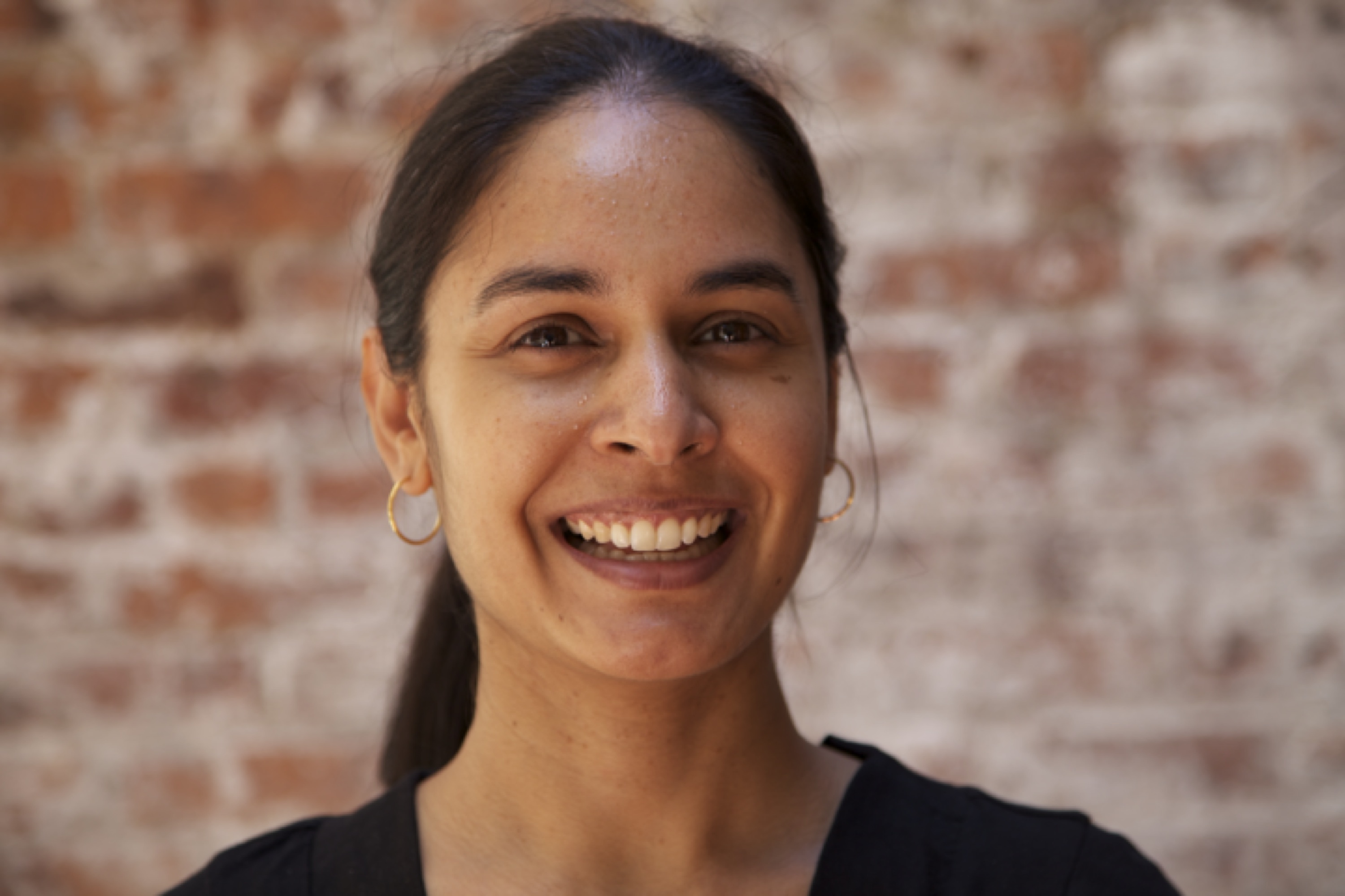
Associate Professor of English and American Studies, Queens College and the CUNY Graduate Center
Duncan Faherty is Associate Professor of English at Queens College and The Graduate Center, CUNY, and is also the Coordinator of the American Studies Certificate Program at The Graduate Center. He is also the co-organizer (with Kandice Chuh) of the Revolutionizing American Studies initiative at The Graduate Center. He is the author of Remodeling the Nation: The Architecture of American Identity, 1776-1858 (U of New England P, 2007) and co-editor of the journal Studies in American Fiction. His work has also appeared in such venues as Early American Literature, American Quarterly, and Reviews in American History. His current book project examines the development of the early U.S. novel by focusing on the canonical interregnum of 1800-1820, and rethinking the ways in which these texts interrogate Circum-Atlantic political and economic networks. This project is particularly interested in thinking about how U.S. cultural production indexes wide spread anxieties about the Haitian Revolution as a means of rethinking its own revolutionary legacies. He is also at work on a project about the War of 1812 and narrative temporalities. His research interests include Eighteenth-century American literature; early U.S. literature and culture (1780-1850); American Studies; and circum-Atlantic Studies.
Nico Israel (nisrael@hunter.cuny.edu)
Associate Professor of English, Hunter College
Raised in Los Angeles, California, USA. Earned BA, UCLA, English, and Ph.D, Yale, English. Focus: Twentieth-century literature, visual art, and critical theory. First book, *Outlandish: Writing between Exile and Diaspora*, published by Stanford University Press i(2000). Has published over a dozen peer-reviewed essays (on Joseph Conrad, Theodor Adorno, Salman Rushdie, Wallace Stevens, and Samuel Beckett, and on questions concerning geography, globalization and ethics). Also published over 75 pieces on visual art (catalogue essays, previews and reviews for *Artforum* on contemporary art exhibitions, etc.).Current book project, *On Spirals: Metamorphosis of a Twentieth-Century Image,* under contract with Columbia University Press, focuses on the spiral as geopolitical and historical “image” in the sense Walter Benjamin gives to the term. Chapters on Italian Futurism and British Vorticism, WB Yeats and Vladimir Tatlin, James Joyce and Marcel Duchamp, and Beckett and Robert Smithson. Other forthcoming publications include two completed chapters in essay collections both currently at press—one on Beckett and Visual Art in the collection Beckett in Context (Cambridge UP, 2013) and one entitled “Re-envisioning Yeats’ Vision: Modernist Spirality and the Distribution of the Sensible” (Blackwell, 2013).Project for “Globalization and Temporality”: “The Recoiling of Global Modernity: Spirals in Literature and Art, 1989-2001, considers works by W.G. Sebald, William Kentridge, Melanie Smith and others.

Associate Professor of English, Hunter College
Raised in Los Angeles, California, USA. Earned BA, UCLA, English, and Ph.D, Yale, English. Focus: Twentieth-century literature, visual art, and critical theory. First book, *Outlandish: Writing between Exile and Diaspora*, published by Stanford University Press i(2000). Has published over a dozen peer-reviewed essays (on Joseph Conrad, Theodor Adorno, Salman Rushdie, Wallace Stevens, and Samuel Beckett, and on questions concerning geography, globalization and ethics). Also published over 75 pieces on visual art (catalogue essays, previews and reviews for *Artforum* on contemporary art exhibitions, etc.).Current book project, *On Spirals: Metamorphosis of a Twentieth-Century Image,* under contract with Columbia University Press, focuses on the spiral as geopolitical and historical “image” in the sense Walter Benjamin gives to the term. Chapters on Italian Futurism and British Vorticism, WB Yeats and Vladimir Tatlin, James Joyce and Marcel Duchamp, and Beckett and Robert Smithson. Other forthcoming publications include two completed chapters in essay collections both currently at press—one on Beckett and Visual Art in the collection Beckett in Context (Cambridge UP, 2013) and one entitled “Re-envisioning Yeats’ Vision: Modernist Spirality and the Distribution of the Sensible” (Blackwell, 2013).Project for “Globalization and Temporality”: “The Recoiling of Global Modernity: Spirals in Literature and Art, 1989-2001, considers works by W.G. Sebald, William Kentridge, Melanie Smith and others.
John Maciuika (john.maciuika@baruch.cuny.edu)
Associate Professor of Art and Architectural History, Baruch College and the CUNY Graduate Center
John Maciuika is an associate professor of art and architectural history at the City University of New York, Baruch College, and the CUNY Graduate Center Ph.D. Program in Art History. His research focuses on the politics of modern architecture, design, and the applied arts in particular national and cultural contexts, particularly Germany, Austria, and the Baltic states. A recipient of fellowships from the DAAD (German Academic Exchange Service), the Alexander von Humboldt Foundation, and the NEH, Professor Maciuika is the author of the book, Before the Bauhaus: Architecture, Politics, and the German State, 1890-1920 (Cambridge University Press, 2005). He recently completed a three-year term as book review editor for modern architecture for the Journal of the Society of Architectural Historians, and another as president of the Society of Architectural Historians’ New York Metropolitan Chapter. He is currently at work on a book entitled Infrastructures of Memory: Historical Reconstruction and Cultural Heritage in Central and Eastern Europe.

Associate Professor of Art and Architectural History, Baruch College and the CUNY Graduate Center
John Maciuika is an associate professor of art and architectural history at the City University of New York, Baruch College, and the CUNY Graduate Center Ph.D. Program in Art History. His research focuses on the politics of modern architecture, design, and the applied arts in particular national and cultural contexts, particularly Germany, Austria, and the Baltic states. A recipient of fellowships from the DAAD (German Academic Exchange Service), the Alexander von Humboldt Foundation, and the NEH, Professor Maciuika is the author of the book, Before the Bauhaus: Architecture, Politics, and the German State, 1890-1920 (Cambridge University Press, 2005). He recently completed a three-year term as book review editor for modern architecture for the Journal of the Society of Architectural Historians, and another as president of the Society of Architectural Historians’ New York Metropolitan Chapter. He is currently at work on a book entitled Infrastructures of Memory: Historical Reconstruction and Cultural Heritage in Central and Eastern Europe.
Karen Miller (kayrenee@gmail.com)
Associate Professor of Social Science, LaGuardia Community College
Karen Miller is Associate Professor of History at LaGuardia Community College. Her book, Managing Inequality: Northern Racial Liberalism and Black Activism in Interwar Detroit, is forthcoming from NYU press. She has been a faculty fellow at the Center for Place, Culture, and Politics and the Center for Humanities at the CUNY Graduate Center, as well as a visiting scholar at the Eisenberg Institute for Historical Studies at the University of Michigan. Her current project , The Time Between the Colonial and the Postcolonial: Recasting Global and Local Inequalities during the Philippines’ Transition to Independence, focuses on the transition to independence in the Philippines, between 1934, when the U.S. Congress set a timetable for independence and July 4, 1946, when the Philippines became a legally sovereign nation. She examines this decade of transition as a temporal suspension: a time after colonial dependence, but before postcolonial independence.
Associate Professor of Social Science, LaGuardia Community College

Karen Miller is Associate Professor of History at LaGuardia Community College. Her book, Managing Inequality: Northern Racial Liberalism and Black Activism in Interwar Detroit, is forthcoming from NYU press. She has been a faculty fellow at the Center for Place, Culture, and Politics and the Center for Humanities at the CUNY Graduate Center, as well as a visiting scholar at the Eisenberg Institute for Historical Studies at the University of Michigan. Her current project , The Time Between the Colonial and the Postcolonial: Recasting Global and Local Inequalities during the Philippines’ Transition to Independence, focuses on the transition to independence in the Philippines, between 1934, when the U.S. Congress set a timetable for independence and July 4, 1946, when the Philippines became a legally sovereign nation. She examines this decade of transition as a temporal suspension: a time after colonial dependence, but before postcolonial independence.
Postdoctoral Fellow
Marina Sitrin (marina.sitrin@gmail.com) 
Postdoctoral Fellow at the CUNY Graduate Center, Committee on Globalization and Social Change
Marina received her PhD in Global Sociology from Stony Brook University in 2011 and her JD in International Women’s Human Rights from CUNY Law School in 2001. She is the author of Horizontalism: Voices of Popular Power in Argentina (AK Press, 2006: Spanish edition Chilavert, 2005 Buenos Aires) and the forthcoming, with Zed Press, Everyday Revolutions: Horizontalism and Autonomy in Argentina. She has spent the past 5 years collaborating on Insurgent Democracies: Latin Americas New Powers, a book grounded in the voices of people in the various new movements, discussing the diverse paths towards power, democracy and social change. Her work focuses on social movements and justice, specifically looking at new forms of social organization, such as autogestión, horizontalidad, prefigurative politics and new affective social relationships. While much of her most recent published work has been on the contemporary social movements in Argentina, she has worked throughout the Americas, Caribbean and Japan. Her current research includes the global mass assembly movements (Greece, Spain and Egypt) and together with movement scholars and academics, examining what these movements might contribute to counter-hegemonic forms of globalization.

Postdoctoral Fellow at the CUNY Graduate Center, Committee on Globalization and Social Change
Marina received her PhD in Global Sociology from Stony Brook University in 2011 and her JD in International Women’s Human Rights from CUNY Law School in 2001. She is the author of Horizontalism: Voices of Popular Power in Argentina (AK Press, 2006: Spanish edition Chilavert, 2005 Buenos Aires) and the forthcoming, with Zed Press, Everyday Revolutions: Horizontalism and Autonomy in Argentina. She has spent the past 5 years collaborating on Insurgent Democracies: Latin Americas New Powers, a book grounded in the voices of people in the various new movements, discussing the diverse paths towards power, democracy and social change. Her work focuses on social movements and justice, specifically looking at new forms of social organization, such as autogestión, horizontalidad, prefigurative politics and new affective social relationships. While much of her most recent published work has been on the contemporary social movements in Argentina, she has worked throughout the Americas, Caribbean and Japan. Her current research includes the global mass assembly movements (Greece, Spain and Egypt) and together with movement scholars and academics, examining what these movements might contribute to counter-hegemonic forms of globalization.
Dissertation Fellows
Jennifer Corby (jcorby@gc.cuny.edu)
Doctoral candidate at the CUNY Graduate Center
Jennifer Corby is a doctoral candidate in the political science department at The CUNY Graduate Center. She is writing her dissertation on the temporalities evoked by—and the tensions between—modern political theory, modern political institutions, and lived reality. She is interested in questions about the forces that shape our perception of time, and the impact these perceptions have on the development of subjectivity and political agency. She is the co-founder and co-director of the Association for Critical Theory at The Graduate Center. Jennifer also teaches introductory and upper-level political philosophy courses at the City College of New York, where she was recently nominated by her department for the campus-wide Outstanding Teaching Award.

Doctoral candidate at the CUNY Graduate Center
Jennifer Corby is a doctoral candidate in the political science department at The CUNY Graduate Center. She is writing her dissertation on the temporalities evoked by—and the tensions between—modern political theory, modern political institutions, and lived reality. She is interested in questions about the forces that shape our perception of time, and the impact these perceptions have on the development of subjectivity and political agency. She is the co-founder and co-director of the Association for Critical Theory at The Graduate Center. Jennifer also teaches introductory and upper-level political philosophy courses at the City College of New York, where she was recently nominated by her department for the campus-wide Outstanding Teaching Award.
Fiona Lee (fiona.lee@gmail.com)
Doctoral candidate at the CUNY Graduate Center
Fiona Lee is a Ph.D Candidate in English at the City University of New York – The Graduate Center. Her research considers the impact of the Cold War on race and the formation of postcolonial Malaysia through an analysis of visual and literary representations of the Malayan Emergency. She has published review essays in Reviews in Cultural Theory; Interventions: International Journal of Postcolonial Studies; and Alphaville: Journal of Film and Screen Media. She is also an Instructional Technology Fellow at Macaulay Honors College (CUNY), where she works with faculty on integrating digital technology with pedagogy, as well as with students to develop web literacy.

Doctoral candidate at the CUNY Graduate Center
Fiona Lee is a Ph.D Candidate in English at the City University of New York – The Graduate Center. Her research considers the impact of the Cold War on race and the formation of postcolonial Malaysia through an analysis of visual and literary representations of the Malayan Emergency. She has published review essays in Reviews in Cultural Theory; Interventions: International Journal of Postcolonial Studies; and Alphaville: Journal of Film and Screen Media. She is also an Instructional Technology Fellow at Macaulay Honors College (CUNY), where she works with faculty on integrating digital technology with pedagogy, as well as with students to develop web literacy.
Doctoral Fellows
Danya Al-Saleh (dal-saleh@gc.cuny.edu)
PhD student in Anthropology at the CUNY Graduate CenterDanya Al-Saleh received her BA in Political Science from UC Berkeley. She has taught and studied in various educational institutions across California, Cairo, Egypt, and Doha, Qatar. Influenced by international struggles over education, her research interests include the globalization of universities, intellectual history, post-colonialism, and critical development studies, with an area focus on the Middle East.

PhD student in Anthropology at the CUNY Graduate CenterDanya Al-Saleh received her BA in Political Science from UC Berkeley. She has taught and studied in various educational institutions across California, Cairo, Egypt, and Doha, Qatar. Influenced by international struggles over education, her research interests include the globalization of universities, intellectual history, post-colonialism, and critical development studies, with an area focus on the Middle East.
Mohammed Ezzeldin (mse29@hoyamail.georgetown.edu)
PhD Student in History at the CUNY Graduate Center
Joshua Keton (jketon@gc.cuny.edu)
PhD student in Philosophy at the CUNY Graduate Center
Joshua Keton received his BA in Philosophy from Temple University. He is currently a doctoral student in Philosophy at the CUNY Graduate Center and a teaching fellow at Brooklyn College. He has served as a reviewer for the Journal of Social Philosophy and Assistant to the Director of the Center for Global Ethics and Politics at the Ralph Bunche Institute. His current research focus is on human rights and their relation to social and global justice, international law, constitutionalism, and environmental ethics.

PhD student in Philosophy at the CUNY Graduate Center
Joshua Keton received his BA in Philosophy from Temple University. He is currently a doctoral student in Philosophy at the CUNY Graduate Center and a teaching fellow at Brooklyn College. He has served as a reviewer for the Journal of Social Philosophy and Assistant to the Director of the Center for Global Ethics and Politics at the Ralph Bunche Institute. His current research focus is on human rights and their relation to social and global justice, international law, constitutionalism, and environmental ethics.
Fabio Mattioli (fmattioli@gc.cuny.edu) 
PhD Student in Anthropology at the CUNY Graduate Center
Fabio Mattioli obtained his BA in Political Philosophy from Florence University (Italy) and his MA in Social Anthropology at the Ecole des Hautes Etudes en Sciences Sociales (EHESS, Paris France). Before joining the PhD program in Anthropology, he has been visiting researcher at the university Ss Cyril and Methodius of Skopje, Rep. of Macedonia. Fabio is interested in questions of Urban Anthropology, Aesthetics, Consumption, and Citizenship. He is currently exploring the articulation of political economy and subjective experience, looking at how the production of space translates into subjectivity. His secret dream is to learn how to prepare burek.

PhD Student in Anthropology at the CUNY Graduate Center
Fabio Mattioli obtained his BA in Political Philosophy from Florence University (Italy) and his MA in Social Anthropology at the Ecole des Hautes Etudes en Sciences Sociales (EHESS, Paris France). Before joining the PhD program in Anthropology, he has been visiting researcher at the university Ss Cyril and Methodius of Skopje, Rep. of Macedonia. Fabio is interested in questions of Urban Anthropology, Aesthetics, Consumption, and Citizenship. He is currently exploring the articulation of political economy and subjective experience, looking at how the production of space translates into subjectivity. His secret dream is to learn how to prepare burek.
Jessica Mahlbacher (jmahlbacher@gc.cuny.edu)
PhD Student in Political Science at the CUNY Graduate Center
Jessica Mahlbacher is a first year doctoral student in Political Science at the CUNY Graduate Center. She received her BA in History and Political Science from Fordham University, and her MPHIL in Development Studies from the University of Cambridge. Her research interests include how authoritarian regimes maintain legitimacy and assess public opinion, mobilization through social media and the Internet, how globalization affects information transaction costs, and the effect of Diaspora communities on national politics.

PhD Student in Political Science at the CUNY Graduate Center
Jessica Mahlbacher is a first year doctoral student in Political Science at the CUNY Graduate Center. She received her BA in History and Political Science from Fordham University, and her MPHIL in Development Studies from the University of Cambridge. Her research interests include how authoritarian regimes maintain legitimacy and assess public opinion, mobilization through social media and the Internet, how globalization affects information transaction costs, and the effect of Diaspora communities on national politics.
Kamran Moshref (kmoshref@gc.cuny.edu)PhD Student in Political Science at the CUNY Graduate Center
Kamran Moshref is a second-year doctoral student in the Political Science program at the CUNY Graduate Center, a Student Fellow in the 2012-2013 Mellon-Saywer Seminar on “Democratic Citizenship and the Recognition of Cultural Differences”, and a Graduate Teaching Fellow at Queens College, where he teaches International Relations. His research interests include theories of sovereignty and constituent power, globalization and political theory, Marxism(s), materialism and collective subjectivity, and middle-east politics.
Annie Xibos Spencer (anniemspencer@gmail.com)
PhD Student in Earth and Environmental Studies at the CUNY Graduate Center
Annie Xibos Spencer is a doctoral student in geography at the CUNY Graduate Center. Annie’s research explores differentiated spaces of debt and dispossession in post-industrial North America. A native of Florida, Spencer’s work examines the lived experience of being rendered surplus and the quest for livelihood and life-making in the post-Keynesian, post-NAFTA U.S. Sunbelt. Spencer holds an MA in international economics and has worked as a researcher in international development. Annie is a teaching fellow at Hunter College, teaching courses in economic geography.

PhD Student in Earth and Environmental Studies at the CUNY Graduate Center
Annie Xibos Spencer is a doctoral student in geography at the CUNY Graduate Center. Annie’s research explores differentiated spaces of debt and dispossession in post-industrial North America. A native of Florida, Spencer’s work examines the lived experience of being rendered surplus and the quest for livelihood and life-making in the post-Keynesian, post-NAFTA U.S. Sunbelt. Spencer holds an MA in international economics and has worked as a researcher in international development. Annie is a teaching fellow at Hunter College, teaching courses in economic geography.
Frances Tran (ftran@gc.cuny.edu) 
PhD Student in English at the CUNY Graduate Center
Frances Tran is a second-year doctoral candidate in the English program at the CUNY Graduate Center. Her current research examines how affect and aesthetics enable us to re-imagine the spatio-temporal dimensions of globalization and thus to envision alternative transnational and transcultural connections across categories of difference. She is especially interested in how Asian American cultural productions allow us to imagine new political possibilities for solidarity in an age of globalization. Her other research interests include Asian American and Asian diasporic studies, discourses of transnationalism and post-identity, affect studies and ecocriticism.

PhD Student in English at the CUNY Graduate Center
Frances Tran is a second-year doctoral candidate in the English program at the CUNY Graduate Center. Her current research examines how affect and aesthetics enable us to re-imagine the spatio-temporal dimensions of globalization and thus to envision alternative transnational and transcultural connections across categories of difference. She is especially interested in how Asian American cultural productions allow us to imagine new political possibilities for solidarity in an age of globalization. Her other research interests include Asian American and Asian diasporic studies, discourses of transnationalism and post-identity, affect studies and ecocriticism.
Past Fellows of the Committee on Globalization and Social Change